Services

Twelve areas of engineering work, described in full.

Each service below sets out the business need it addresses, the scope of work, the delivery approach and the practical outcome. No pricing, guarantees or purchase controls appear on this page.

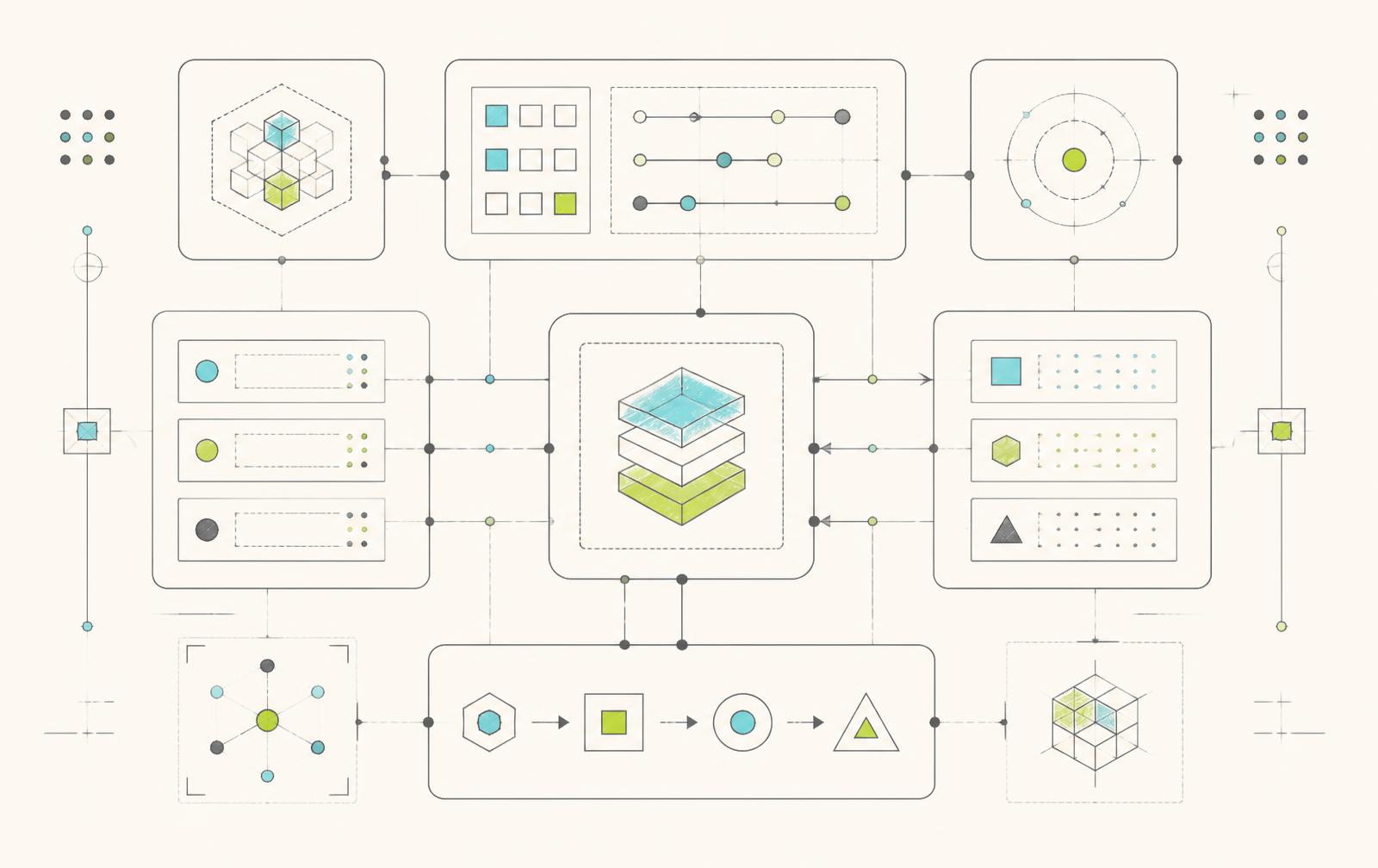
Technical blueprint diagram of modular software architecture components and their connections
Service architecture — components, contracts and flows

Service catalogue

From first assessment to continuous improvement.

Services are frequently combined; most engagements begin with discovery and move into a defined delivery scope.

01

Custom Software Development

Typical business need
An organization runs a process that no available product matches, and the workarounds have become the process itself.
Scope of work
Requirements analysis, data modelling, application architecture, implementation, testing and documentation of a purpose-built system.
Delivery approach
Delivery in reviewed increments, starting with the parts of the process that carry the most operational risk, with working software available throughout.
Expected outcome
A system that reflects how the organization actually operates and can be extended without rebuilding its foundations.

02

Web Application Development

Typical business need
Teams need reliable access to the same information from different locations and devices, with clear permissions.
Scope of work
Interface design and implementation, server-side logic, authentication and authorization, responsive layout, accessibility and performance work.
Delivery approach
Semantic, accessible front-end structure combined with a well-defined backend contract, verified across viewport sizes and input methods.
Expected outcome
An application that is fast, usable on any screen, operable by keyboard, and understandable to new users without training material.

03

Business Process Automation

Typical business need
Repetitive manual steps consume staff time and introduce errors that are discovered late.
Scope of work
Process mapping, identification of automation candidates, rule definition, implementation of scheduled or event-driven workflows and exception handling.
Delivery approach
Automate the stable, well-understood parts first; leave judgement-based steps with people and give them better information instead.
Expected outcome
Fewer manual handovers, more consistent execution and a visible audit trail of what ran, when and with what result.

04

Cloud Architecture and Infrastructure

Typical business need
Environments have grown organically, costs are unclear and deployments depend on individual knowledge.
Scope of work
Environment design, infrastructure as code, networking and access structure, deployment pipelines, monitoring, backup and recovery planning.
Delivery approach
Describe infrastructure declaratively, standardise environments, and make every release follow the same reversible path.
Expected outcome
Reproducible environments, predictable releases, understood costs and a documented recovery position.

05

API Development and System Integration

Typical business need
Systems hold overlapping data and disagree, forcing staff to reconcile records by hand.
Scope of work
Interface design, API implementation and versioning, data mapping, synchronization logic, retry and error handling, integration testing.
Delivery approach
Establish a single owner for each data element, define contracts explicitly, and make failures visible rather than silent.
Expected outcome
Consistent information across connected systems and integrations that can be diagnosed quickly when an upstream service changes.

06

Data Platforms and Analytics

Typical business need
Reporting takes days to assemble, and different departments arrive at different numbers.
Scope of work
Data pipeline design, storage modelling, transformation logic, quality checks, and reporting surfaces for operational and management use.
Delivery approach
Build pipelines that are testable and re-runnable, with defined data quality expectations enforced before figures reach a dashboard.
Expected outcome
Reporting that is current, reproducible and trusted enough to be used for decisions.

07

Cybersecurity and Technical Risk Reduction

Typical business need
Access has accumulated over time, dependencies are outdated and nobody can describe the current exposure.
Scope of work
Review of access models, network and service boundaries, secret management, dependency posture, logging coverage and incident readiness.
Delivery approach
Prioritise findings by realistic impact, apply least privilege, and design monitoring so abnormal behaviour is noticed early. No certification is claimed.
Expected outcome
A documented, prioritized reduction in technical risk and a clearer view of what is actually exposed.

08

Legacy System Modernization

Typical business need
A critical system still works but is difficult to change, hard to staff and increasingly costly to operate.
Scope of work
Assessment of the existing system, dependency mapping, incremental replacement strategy, data migration planning and parallel operation design.
Delivery approach
Replace capability by capability behind stable interfaces, so operations continue while the underlying implementation changes.
Expected outcome
A modernised system reached through reversible steps, without a disruptive single cut-over.

09

Technology Consulting

Typical business need
A significant technical decision has to be made and internal opinions conflict.
Scope of work
Independent review of architecture, tooling, delivery practice and operational maturity, with written findings and options.
Delivery approach
Examine evidence from the systems themselves — code, configuration, incidents and metrics — before forming recommendations.
Expected outcome
A clear, argued basis for the decision, including the option of leaving a sound system in place.

10

Product Discovery and Technical Planning

Typical business need
An idea exists, but scope, sequencing and feasibility are undefined.
Scope of work
Goal clarification, constraint analysis, domain modelling, solution outline, delivery sequencing and risk identification.
Delivery approach
Reduce the concept to the smallest version that proves the value, then plan expansion around what is learned.
Expected outcome
A realistic plan with an understood first release, known risks and a defensible order of work.

11

Quality Assurance and Testing

Typical business need
Releases cause regressions, and confidence in changes depends on manual checking.
Scope of work
Test strategy, automated unit, integration and end-to-end coverage, performance testing, accessibility review and release validation.
Delivery approach
Cover critical paths first, keep tests maintained alongside the code, and make the test suite part of the release gate.
Expected outcome
Faster, calmer releases and defects found before users encounter them.

12

Ongoing System Improvement

Typical business need
A delivered system needs continued attention as usage, data volume and requirements change.
Scope of work
Monitoring review, performance tuning, dependency maintenance, incremental feature work and capacity adjustment.
Delivery approach
Prioritise from observed behaviour and measured impact rather than from assumption, in a steady and predictable cadence.
Expected outcome
A system that stays current, performant and secure instead of degrading quietly over time.

Contact information

Enquiries about any of these services.

Details are shown as plain text.

Company
Zap Logistik GmbH
Website
zaplogistik.com